Table of contents
- Introduction
- What Is Longevity Training?
- Why America Is Shifting Away from Aesthetics-Only Fitness
- The Science Behind Training for Longevity
- Key Principles of Longevity-Focused Training
- How Americans Are Structuring Longevity-Based Fitness
- Aesthetics vs Longevity: The Honest Comparison
- The Psychological Shift
- Why This Matters for the Future of American Health
- Conclusion
Key Takeaways
- Americans are shifting from aesthetics-focused fitness to longevity-focused training, emphasizing health and independence.
- Longevity training aims to extend healthspan rather than just lifespan by prioritizing joint health, muscle preservation, and cardiovascular efficiency.
- Injuries and chronic diseases drive the need for sustainable fitness practices that support long-term health.
- Key principles include functional strength, joint-friendly movements, balance, and recovery as essential components of training.
- This approach reduces healthcare costs, enhances quality of life, and aligns with medical science for a healthier future.
Introduction
For decades, fitness in America revolved around one question:
“How do I look?”
Six-pack abs. Low body fat. Mirror muscles.
The gym was a place to sculpt the body for appearance—not necessarily for life.
But in 2025, that question is being replaced with something far more powerful:
“How long can I stay healthy, strong, and independent?”
Welcome to the era of longevity-focused training, where Americans are no longer chasing aesthetics alone—but building bodies that last.
This shift is redefining fitness culture across the U.S., from gyms and physical therapy clinics to social media and corporate wellness programs.
What Is Longevity Training?
Longevity training is a fitness approach designed to extend healthspan, not just lifespan.
- Lifespan = how long you live
- Healthspan = how long you live well
Longevity-focused fitness prioritizes:
- Joint health
- Muscle preservation
- Cardiovascular efficiency
- Balance and coordination
- Metabolic and hormonal stability
Instead of asking “How hard can I push today?”, it asks:
“Will this help me move better 20 years from now?”
Why America Is Shifting Away from Aesthetics-Only Fitness
1. The Aging Reality
The average American population is aging rapidly.
According to the U.S. Census Bureau, by 2030, 1 in 5 Americans will be over 65.
This has forced a wake-up call:
- Muscle loss (sarcopenia)
- Joint degeneration
- Falls and fractures
- Loss of independence
Fitness is no longer optional—it’s preventative healthcare.
🔗 Source:
https://www.census.gov/library/stories/2018/03/graying-america.html
2. Chronic Disease Is Driving the Change
Over 60% of American adults have at least one chronic disease, and nearly 40% have two or more.
Conditions linked to poor movement and inactivity include:
- Heart disease
- Type 2 diabetes
- Obesity
- Osteoporosis
- Cognitive decline
The CDC clearly states that regular physical activity is one of the most effective ways to prevent chronic illness.
🔗 Source:
https://www.cdc.gov/physicalactivity/basics/pa-health/index.htm
3. Burnout From “Extreme Fitness”
HIIT overload, overtraining, and injury cycles have burned people out.
Many Americans realized:
- Being shredded at 30 means nothing if you’re broken at 45
- Constant soreness ≠ progress
- Fitness shouldn’t destroy your nervous system
Longevity training offers sustainable progress without burnout.
The Science Behind Training for Longevity
🦴 Muscle Mass = Survival Currency
Research shows that muscle mass and strength are among the strongest predictors of longevity.
According to Harvard Health, maintaining muscle:
- Protects joints
- Stabilizes blood sugar
- Supports metabolism
- Reduces fall risk
🔗 Harvard Health:
https://www.health.harvard.edu/staying-healthy/maintaining-muscle-mass
This is why strength training is now considered essential, not optional, for aging well.
🫀 Cardiorespiratory Fitness and Longevity
Cardio health isn’t about running marathons—it’s about heart efficiency.
Studies published by the American Heart Association show that:
- Moderate cardiovascular fitness significantly reduces mortality risk
- Walking, cycling, and Zone 2 cardio improve mitochondrial health
🔗 Source:
https://www.heart.org/en/healthy-living/fitness
Longevity-focused Americans are choosing low-impact cardio they can maintain for decades.
🧠 Brain Health and Movement
Exercise doesn’t just protect the body—it preserves the brain.
The National Institute on Aging confirms that physical activity:
- Improves memory
- Slows cognitive decline
- Reduces Alzheimer’s risk
🔗 Source:
https://www.nia.nih.gov/health/exercise-physical-activity
Longevity training isn’t just about muscles—it’s about mental independence.
Key Principles of Longevity-Focused Training
✅ 1. Strength Over Size
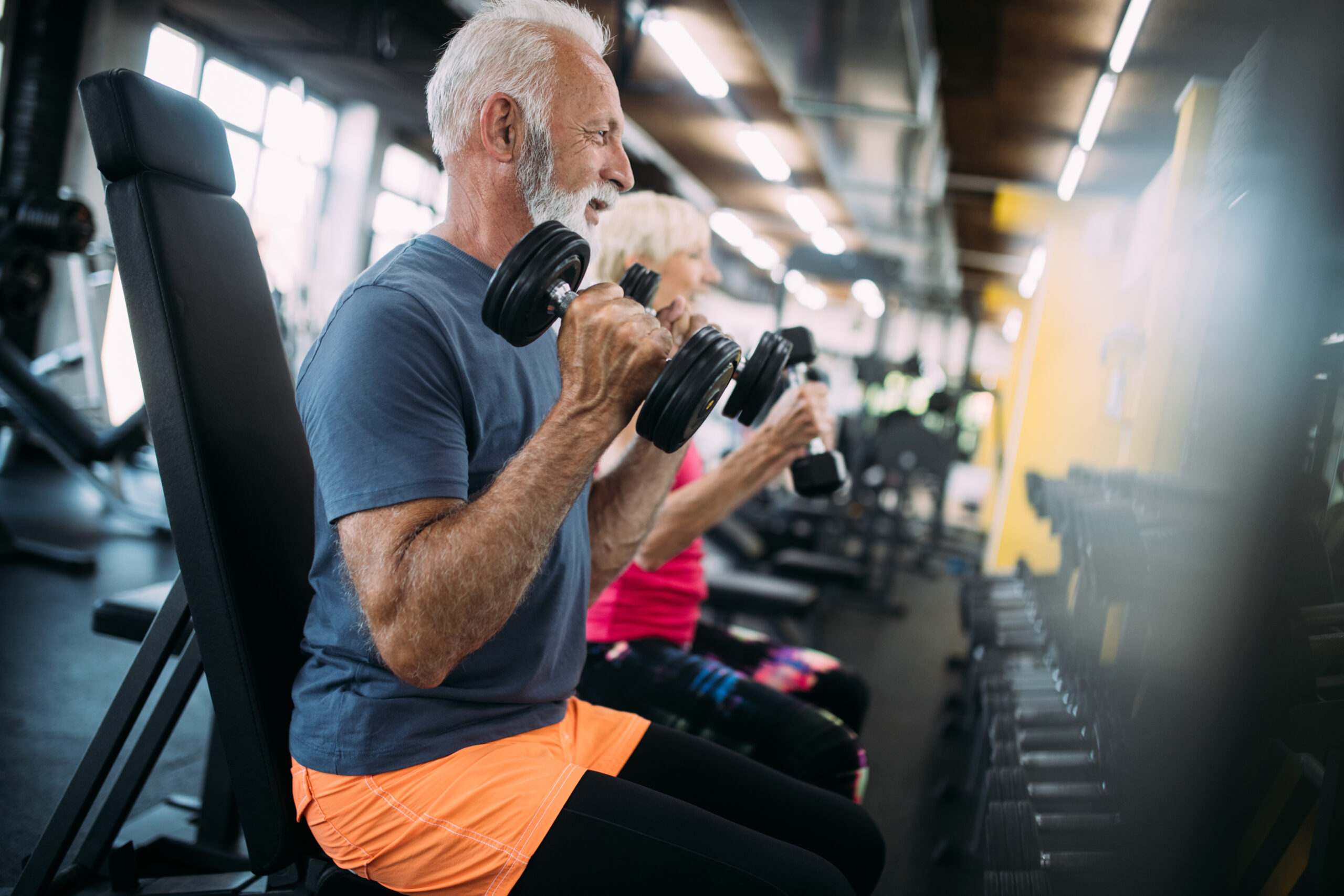
The goal isn’t big muscles—it’s functional strength.
Americans are focusing on:
- Squats
- Deadlifts
- Pushes and pulls
- Carries and core work
These movements translate directly to real life.
✅ 2. Joint-Friendly Movement
Longevity training respects joints.
That means:
- Controlled reps
- Full range of motion
- Mobility work
- Proper warm-ups and recovery
Pain-free movement is the metric—not ego lifting.
✅ 3. Balance and Stability
Falls are a leading cause of injury and death in older adults.
Training balance improves:
- Coordination
- Reaction time
- Neuromuscular control
🔗 CDC on fall prevention:
https://www.cdc.gov/falls/index.html
✅ 4. Recovery Is Non-Negotiable
Sleep, mobility, and stress management are part of training, not optional extras.
The Mayo Clinic emphasizes that recovery is critical for:
- Hormonal balance
- Injury prevention
- Long-term adherence
🔗 Source:
https://www.mayoclinic.org/healthy-lifestyle/fitness/in-depth/exercise/art-20048389
How Americans Are Structuring Longevity-Based Fitness
📅 Sample Weekly Longevity Routine
| Day | Focus |
|---|---|
| Monday | Full-body strength |
| Tuesday | Walking + mobility |
| Wednesday | Light cardio (Zone 2) |
| Thursday | Strength + balance |
| Friday | Yoga or recovery |
| Saturday | Outdoor activity |
| Sunday | Rest |
Simple. Sustainable. Repeatable.
Aesthetics vs Longevity: The Honest Comparison
| Focus | Aesthetics | Longevity |
|---|---|---|
| Primary goal | Looks | Function & health |
| Time horizon | Short-term | Lifetime |
| Injury risk | Higher | Lower |
| Recovery | Often ignored | Prioritized |
| Sustainability | Low | High |
More Americans are realizing that looking good temporarily is meaningless if health declines later.
The Psychological Shift
Training for longevity changes mindset:
- No guilt for rest days
- No obsession with scale weight
- No comparison culture
Fitness becomes an act of self-respect, not punishment.
Why This Matters for the Future of American Health
Longevity training:
- Reduces healthcare costs
- Improves quality of life
- Keeps people independent longer
- Redefines aging
The U.S. fitness industry is finally aligning with medical science, not trends.
Conclusion
America is waking up to a powerful truth:
Fitness isn’t about how you look in the mirror today.
It’s about how you move, think, and live years from now.
Training for longevity is not less ambitious—it’s more intelligent.
Build strength.
Protect your joints.
Move daily.
Recover deeply.
That’s how Americans are redefining fitness—not for summer, but for life.
Continue your growth journey by exploring our guide:
- Intermittent Fasting: Benefits, Methods, and Safety Tips
- Effective Home Workouts: Staying Fit Without the Gym
- Beginner’s Guide to Functional Fitness: Move Better, Feel Stronger
- How to Stay Motivated and Focused on Your Personal Development Journey
-

-

-

-

-
-