Productivity Mastery 2026: The Definitive Guide to Deep Work, Systems, and AI-Driven Focus

Table of contents
- 1. The Systems vs. Goals Paradox: Why Most People Fail
- 2. The Science of Deep Work in the Age of AI
- 3. Building a Second Brain (BASB): Outsourcing Your Memory
- 4. Chronotypes and Peak Performance: Hacking Your Biological Clock
- 5. The 12-Week Year Mastery: Escaping the Annual Trap
- 6. Time Blocking vs. To-Do Lists: The Battle for Your Calendar
- 7. Biohacking for Cognitive Performance
- 8. Overcoming Procrastination: The Science of Starting
- 9. The Power of Saying No: Protecting Your Time Asset
- 10. Designing Your Life: The Vision and Reality
- 11. FAQ: Productivity in the Modern Era
- 12. Conclusion: Engineering the Daily Routine of the 2026 High-Performer
Key Takeaways
- In 2026, success relies on Cognitive Economics—managing brain resources rather than multitasking.
- The shift from goal-oriented thinking to a systems-first philosophy enhances productivity and personal growth.
- Deep Work is essential in a world where AI creates average content, requiring focused effort for elite output.
- Building a Second Brain helps manage information overload and utilize modern tools for effective knowledge retention.
- Time Management in 2026 hinges on understanding your chronotype and implementing systems like the 12-Week Year for accelerated progress.
In the hyper-distracted world of 2026, productivity is no longer about “doing more.” It is about Cognitive Economics—managing your brain’s limited resources to produce results that an AI cannot replicate. As the global economy shifts toward valuing high-level creativity and complex problem-solving, the ability to concentrate is becoming the “New IQ.” Most people are losing the battle against digital noise, but those who master the architecture of focus are building an unshakeable competitive advantage.
This 2,500-word comprehensive guide dismantles the myths of multitasking and provides a scientific roadmap to mastering Deep Work, building a Second Brain, and transitioning from a “Goal-Oriented” mindset to a “Systems-First” philosophy.
1. The Systems vs. Goals Paradox: Why Most People Fail
The most persistent myth in personal development is that setting “Big Goals” is the key to success. In 2026, we recognize that Goals are for losers; Systems are for winners. ### The Problem with Goals:
- Binary Outcome: You are in a state of failure until you reach the goal. If you reach it, the motivation vanishes.
- The “Arrival” Fallacy: Goals assume that life is static. In a volatile 2026 market, a goal set in January might be irrelevant by March.
The Power of Systems:
A system is a repeatable process that guarantees progress regardless of the outcome. If your goal is to write a book, your system is writing 500 words every morning at 7:00 AM. When you focus on the system, you succeed every time you perform the action. Systems lower the cognitive load of “Decision Fatigue” and turn productivity into an automated habit.
2. The Science of Deep Work in the Age of AI
Cal Newport’s concept of Deep Work has become the survival skill of 2026. Deep Work is the ability to focus without distraction on a cognitively demanding task.
Why Deep Work is “Rare Wealth”:
In an era where Generative AI can produce “Average” content in seconds, the only value humans provide is “Elite” output. Elite output requires a state of “Flow”—where the prefrontal cortex operates at peak efficiency.
- Attention Residue: Every time you check a notification, a part of your brain stays stuck on that distraction for up to 20 minutes. If you check your phone every 10 minutes, you are effectively working at 50% of your cognitive capacity.
- The 4-Hour Rule: The human brain is only capable of 3 to 4 hours of true Deep Work per day. The masters of 2026 protect these 4 hours as if their lives depended on it.
3. Building a Second Brain (BASB): Outsourcing Your Memory
In 2026, the human brain is for having ideas, not for holding them. With the explosion of information, your biological brain is constantly overwhelmed. This is where the Second Brain (a digital system for note-taking and knowledge management) comes in.
The CODE Method (Capture, Organize, Distill, Express):
- Capture: Only save what resonates with you from the sea of digital content.
- Organize: Don’t organize by “Topic”; organize by Action. Create folders for your current projects.
- Distill: Summarize your notes so your “Future Self” can understand the core idea in 30 seconds.
- Express: Use your digital library to create new work, solve problems, and connect dots that others miss.
- Recommended Tools: Notion, Obsidian, or Microsoft OneNote.
4. Chronotypes and Peak Performance: Hacking Your Biological Clock
In 2026, “The 5 AM Club” is recognized as bad advice for half the population. Productivity is biological. By understanding your Chronotype, you can align your hardest tasks with your brain’s natural energy peaks.
- Lions (Early Risers): Should do Deep Work before 10 AM.
- Bears (Follow the Sun): Peak focus is between 10 AM and 2 PM.
- Wolves (Night Owls): Should save complex tasks for late afternoon or evening.
- The Strategy: Identify your peak window and schedule your “Deep Work” blocks during that time. Use your “Trough” (low energy periods) for “Shallow Work” like emails and meetings.
5. The 12-Week Year Mastery: Escaping the Annual Trap
Traditional “Yearly Planning” is too slow for 2026. The 12-Week Year philosophy treats every 12 weeks as a full year.
- The Sense of Urgency: When the “year-end” is only 3 weeks away, you stop procrastinating.
- Rapid Iteration: You get 4 “years” of growth for every one calendar year. This allows for rapid pivots in your financial and personal life.
6. Time Blocking vs. To-Do Lists: The Battle for Your Calendar
To-do lists are “wish lists.” Time Blocking is a commitment.
- The Method: Give every minute a job. If a task isn’t on your calendar, it doesn’t exist.
- The “Buffer” Block: In 2026, the most productive people leave 15-30% of their day empty for “reactive” tasks. This prevents your entire schedule from collapsing when an emergency arises.
7. Biohacking for Cognitive Performance
You cannot have an elite mind in a neglected body. In 2026, top performers use specific protocols to sharpen their mental edge:
- The Caffeine Gap: Waiting 90 minutes after waking up to consume caffeine prevents the afternoon crash by allowing “Adenosine” to clear from your system.
- Non-Sleep Deep Rest (NSDR): A 20-minute NSDR session can restore cognitive function as effectively as a 2-hour nap without the grogginess.
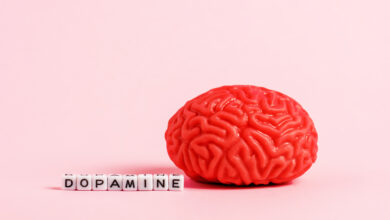
- Dopamine Detox: Regularly unplugging from high-dopamine triggers (social media, infinite scroll) resets your brain’s reward system, making “hard work” feel satisfying again.
8. Overcoming Procrastination: The Science of Starting
Procrastination is not a time-management problem; it is an Emotional Regulation problem. We procrastinate because a task makes us feel anxious or overwhelmed.
- The 5-Minute Rule: Tell yourself you will only work on a task for 5 minutes. The “Zeigarnik Effect” ensures that once you start, your brain will want to finish.
- Micro-Wins: Break a massive project into “micro-tasks” so small they feel ridiculous to skip.
9. The Power of Saying No: Protecting Your Time Asset
In 2026, “No” is a superpower. Every time you say “Yes” to a low-value meeting or a social obligation you don’t care about, you are saying “No” to your future wealth. High-performers have a high “Bar of Entry” for their time. If it isn’t a “Hell Yes,” it’s a “No.”
10. Designing Your Life: The Vision and Reality
Your environment is the invisible hand that shapes your behavior. If your phone is on your desk, your focus is compromised. If your kitchen is full of junk food, your energy will crash.
- Environmental Design: Create a dedicated “Deep Work Station” where only work happens. Your brain will eventually associate that physical space with high-level concentration.
11. FAQ: Productivity in the Modern Era
Q: Can I multi-task if the tasks are simple? A: No. Multitasking is a myth. You are simply “Switch-Tasking,” which incurs a heavy cognitive cost. Even simple tasks suffer from reduced quality when your attention is divided.
Q: How do I handle constant notifications at work? A: Use “Focus Modes” on your devices. In 2026, the most professional thing you can do is have an “Out of Office” auto-responder that says: “I am currently in a Deep Work block to produce better results for you. I check messages at 11 AM and 4 PM.”
Q: Is “Build a Second Brain” complicated to set up? A: It starts with one note. Don’t build a complex system first; just start capturing ideas that excite you and organize them by the projects you are currently working on.
12. Conclusion: Engineering the Daily Routine of the 2026 High-Performer
Productivity is not about being a robot; it is about being a Conscious Architect of your own life. By moving from goals to systems, embracing Deep Work, and leveraging the biology of your chronotype, you aren’t just getting things done—you are reclaiming your most finite asset: Your Time. In 2026, the elite are those who can sit in a room for 4 hours and produce work that changes the world. Will you be one of them?
Continue your growth journey by exploring our guide: